
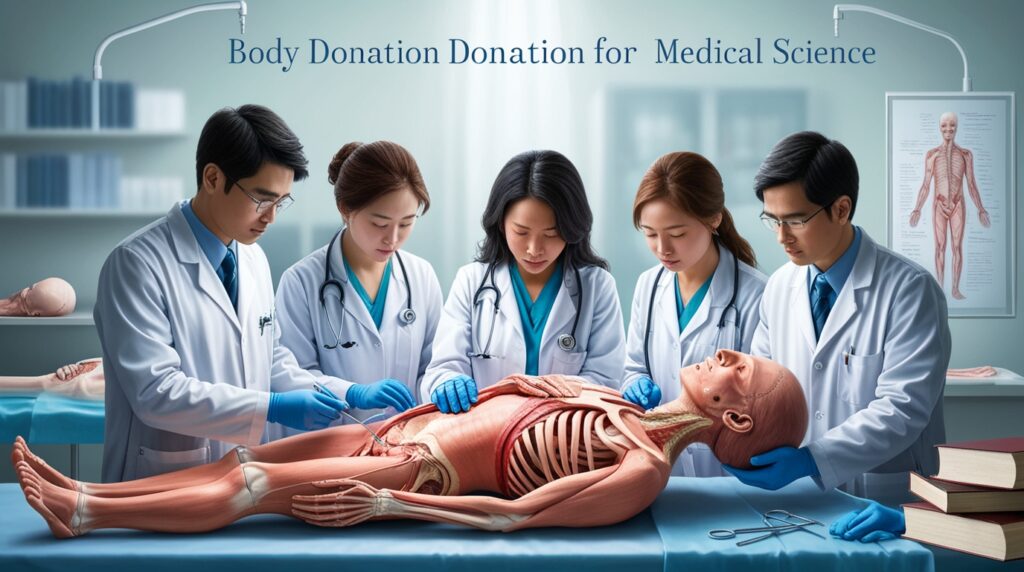
Body donation is an act of selflessness, allowing individuals to contribute to medical education and research after death. By donating one’s body, individuals play a crucial role in advancing scientific knowledge and enabling future doctors to learn and practice skills that save lives. This blog delves into the process, significance, and regulations surrounding body donation after death in India.
The Significance of Body Donation
The primary use of a donated body is educational. Medical students and researchers gain hands-on experience by studying the human anatomy, which enhances their learning and skills. According to Dr. Manish Kumar, bodies donated to hospitals are used primarily by first-year medical students, who study different parts of the body to understand its intricate structure.
The donated body is preserved using formalin, a chemical that prevents bacterial growth and decomposition. This process turns the body rigid, like wood, ensuring it does not decay during its use in research. Typically, the body remains in the hospital for a few months, after which it is either returned to the family or respectfully cremated or buried, depending on the hospital’s protocols and family preferences.
How is a Donated Body Used?
- Educational Purposes: Medical students examine the body to understand its various parts, honing their skills in dissection and anatomy.
- Research: In some cases, the body is used for medical research, aiding advancements in medical science and the development of new treatment techniques.
- Final Disposition: Once the body has been fully utilized for educational or research purposes, it is either returned to the family for final rites or cremated or buried by the institution. Although the body’s structure may change, it remains in a dignified state.
Rules for Body Donation in India
There are two main ways body donation can take place in India:
- Donation by Consent: A person can register for body donation during their lifetime. This requires filling out a donation form signed by two witnesses, one of whom must be a close relative.
- Family Consent Post-Death: If the deceased did not register for body donation during their lifetime, their family members can make the decision to donate their body after death.
Body donation is generally free of cost, with hospitals and institutions covering all expenses related to the donation process. It’s crucial to inform the hospital or body donation organization immediately after death to ensure the process begins promptly.
Organ Donation vs. Body Donation
While body donation involves the whole body, organ donation involves the extraction of specific organs for transplant into patients in need. The two processes differ, and it’s essential to understand their distinctions:
- Brain Death: Organs like the heart, liver, kidneys, intestines, and lungs can only be donated in cases of brain death.
- Natural Death: In cases of natural death, only tissues such as corneas, heart valves, bones, and skin can be donated.
- Time Frame for Organ Donation: The removal of organs must occur within a specific timeframe after death:
- Lungs: 4 to 6 hours
- Heart: 4 hours
- Liver: 24 hours
- Kidneys: 72 hours
- Corneas: 14 days
- Bones: 5 years
- Skin: 5 years
- Heart valves: 10 years
After organ donation, the body is returned to the family, allowing them to perform last rites. It’s important to note that donating organs does not prevent the family from conducting traditional funeral practices.
Steps to Donate Your Body
- Registration: Contact a medical college or hospital that accepts body donations. You’ll need to fill out a form, signed by two witnesses.
- Inform Family: Ensure that your family is aware of your decision so they can notify the hospital or relevant institution immediately after your death.
- Post-Death Procedures: After death, the body must be transferred to the medical institution as soon as possible. The hospital will take care of the formalin treatment and handle the body for its intended educational or research use.
Ethical Considerations
Body donation is a highly ethical and noble act, requiring transparent consent and respect for the donor’s body. Medical institutions are bound by strict guidelines to ensure that the body is treated with the utmost dignity and care throughout the educational or research process.
Conclusion: A Gift of Life Beyond Death
Body donation in India is a powerful way to contribute to medical science and society after one’s passing. By understanding the process and significance of body donation, individuals can make informed decisions about how they wish to leave a lasting impact.
SEO Tags:
- Title Tag: Body Donation After Death in India: Guidelines & Process
- Meta Description: Discover the process and significance of body donation after death in India. Learn how to donate your body for medical education and research.
- Keywords: body donation India, organ donation, body donation process, medical research donation, donate body to medical science, after death donation
