
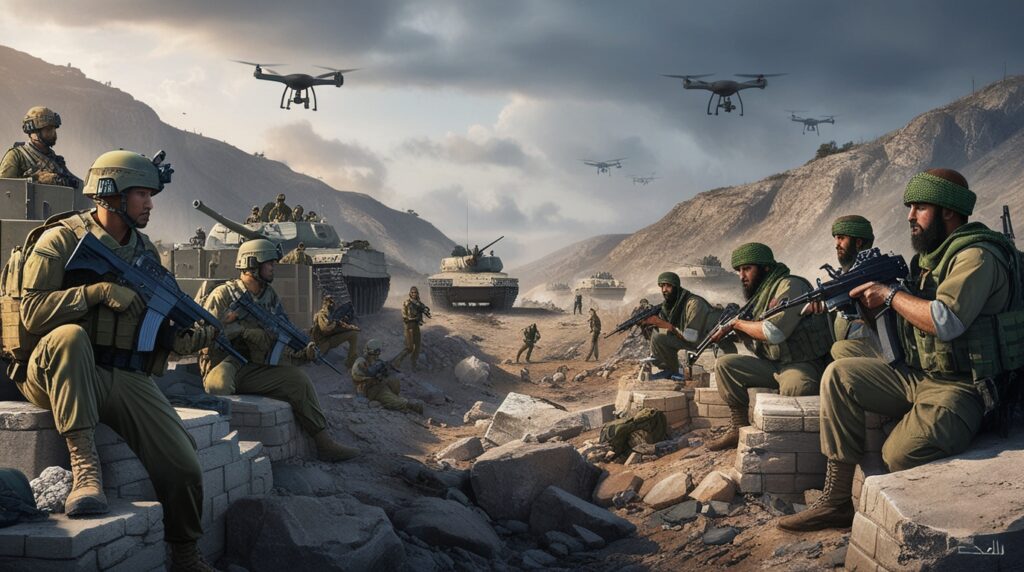
The Israel-Lebanon conflict, especially with the involvement of Hezbollah, has been a complex and enduring struggle, driven by a combination of political, religious, and territorial issues. Here’s a timeline that captures the key events shaping this conflict:
1. Early Tensions (1948-1970s)
- 1948 Arab-Israeli War: Lebanon joined other Arab states in the conflict against Israel after its establishment. Though Lebanon’s role was minor, this war marked the beginning of fraught relations.
- 1950s-1960s: Although Lebanon-Israel tensions remained lower than on Israel’s other borders, Palestinian militancy from southern Lebanon sparked increased hostility.
2. Rise of Palestinian Militancy (1970s)
- 1970 Black September: Following their expulsion from Jordan, the PLO relocated to Lebanon, using southern Lebanon as a base to attack Israel, escalating tensions.
- 1975 Lebanese Civil War: The PLO became deeply involved in Lebanon’s internal conflict and continued assaults on Israel, prompting Israeli military retaliation.
3. First Israeli Invasion (1982)
- 1982 Lebanon War (Operation Peace for Galilee): Israel invaded Lebanon, aiming to expel the PLO. Israeli forces reached Beirut, where they laid siege to the city.
- Sabra and Shatila Massacre: Christian militias allied with Israel committed a massacre in Palestinian refugee camps, causing widespread condemnation of Israel.
- 1985 Israeli Withdrawal: Facing heavy casualties and international pressure, Israel withdrew to a self-declared “security zone” in southern Lebanon, facing continued resistance from Hezbollah.
4. Rise of Hezbollah (1980s-2000s)
- 1980s Formation of Hezbollah: Hezbollah, supported by Iran and Syria, emerged as a dominant force in response to Israel’s occupation, initiating guerrilla warfare.
- 1990s Conflicts: Hezbollah launched persistent attacks on Israeli positions. Major Israeli operations like Operation Accountability (1993) and Operation Grapes of Wrath (1996) aimed to curb Hezbollah’s influence but had limited success.
- 2000 Israeli Withdrawal: Israel unilaterally withdrew from southern Lebanon after 18 years of occupation, a move hailed as a victory by Hezbollah.
5. 2006 Israel-Hezbollah War
- Hezbollah’s Cross-border Raid: Hezbollah’s raid and capture of Israeli soldiers in July 2006 led to a large-scale conflict. Israel retaliated with intense airstrikes and a ground invasion.
- Widespread Destruction: Both Lebanon, particularly its southern regions, and Israel were heavily impacted by bombings and rocket fire.
- UN Ceasefire: After 34 days, a UN-brokered ceasefire (Resolution 1701) ended hostilities, calling for the deployment of Lebanese and UN peacekeepers in southern Lebanon.
6. Post-2006 Tensions and Skirmishes
- Continued Skirmishes: Sporadic clashes between Hezbollah and Israeli forces persisted after 2006, but full-scale war was avoided.
- Hezbollah in the Syrian Civil War: Hezbollah’s involvement in the Syrian conflict on behalf of the Assad regime further complicated its standing with Israel.
7. Current Status (2020s)
- Border Tensions: The Israel-Lebanon border remains volatile, with occasional flare-ups and disputes, particularly in the Shebaa Farms area.
- Hezbollah’s Strength: Hezbollah has grown into a powerful political and military entity within Lebanon, maintaining a substantial rocket arsenal and strong ties to Iran, posing a serious threat to Israeli security.
Key Issues in the Conflict
- Territorial Disputes: The contested Shebaa Farms region remains a point of friction.
- Hezbollah’s Armament: Hezbollah’s large rocket and missile stockpile, along with its alignment with Iran, continues to fuel regional instability.
- Lebanese Political Instability: Lebanon’s political weakness, compounded by Hezbollah’s autonomy, has hindered efforts toward peace.
The Israel-Lebanon conflict is not only a border dispute but a multifaceted issue deeply connected to broader regional tensions, particularly involving the Israel-Palestine conflict, Iranian influence, and the dynamics of the Syrian Civil War.
